
DQ400e faults involve more than gear changes
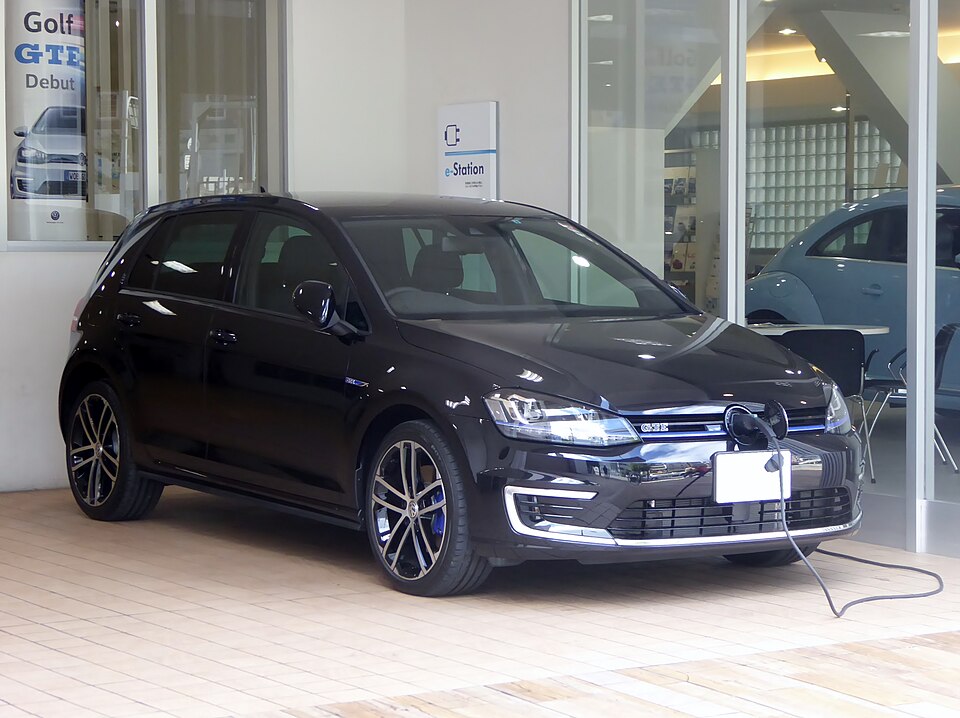
This guide focuses on the earlier DQ400e hybrid DSG, as illustrated by the Golf Mk7 GTE. The newer DQ400e evo in the Passat eHybrid is covered separately. Confirm the fitted transmission before applying either guide.
A plug-in hybrid can drive on electric power, use its petrol engine or combine both. The DQ400e gearbox helps make those changes possible, so an awkward handover between power sources can feel like a gearbox problem even before the cause is known. A warning or judder is a reason to investigate, not proof that the mechatronic unit needs replacing.
At Trescothick Automotive in Bristol, we provide DSG and mechatronic diagnosis. Accurate identification, diagnostic information and practical testing come before a repair recommendation.
What is the DQ400e hybrid DSG?
The DQ400e is a six-speed dual-clutch gearbox developed for plug-in hybrid applications. The electric drive motor is integrated with the transmission, allowing the drivetrain to use petrol power, electric power or a combination. The original family is also associated with the gearbox designation 0DD.
That integration is the important difference from an ordinary automatic gearbox. A complaint may involve changing gear, bringing the petrol engine into the drivetrain, or coordinating the two sources of power. Those are related events, but they are not identical diagnostic problems.
Why a dual-clutch hybrid has a third clutch
The familiar DSG clutches, K1 and K2, serve the two transmission paths. The hybrid arrangement adds another clutch, known as K0, which connects or separates the petrol engine from the electric drive side. The engine can therefore be disconnected when the car is being driven electrically.
This gives a technician an extra question to answer. Is the complaint happening during a gear change, or when the petrol engine joins in? The driver may describe either event as a jolt, but the operating conditions can help direct the investigation.
The existence of K0 does not mean every transition complaint is a K0 failure. Its operation, its control and the rest of the drivetrain must be considered together. Buying a clutch or mechatronic unit from a symptom description alone skips that distinction.
Which cars are relevant?
Volkswagen identifies the DQ400e in Golf GTE and Golf eHybrid technical information. Related six-speed plug-in hybrid drivetrain applications include the Audi A3 e-tron, SEAT Leon e-HYBRID, CUPRA Leon e-HYBRID and Škoda Superb iV. Exact gearbox identification still depends on the vehicle, production date and drivetrain generation.
These are petrol plug-in hybrids. A mild-hybrid badge, an electric model name or a six-speed selector display is not enough to identify a DQ400e. Nor should advice for a conventional petrol CUPRA be assumed to apply unchanged to an e-HYBRID.
DQ400e and DQ400e evo: check the generation
Later applications use an evolved version. For example, Volkswagen describes the newer Passat eHybrid drivetrain as combining the 1.5 TSI evo2 engine with the DQ400e evo, which still integrates the electric drive motor into a six-speed DSG.
This is why an article about an earlier 1.4-litre plug-in hybrid cannot establish parts compatibility or the correct repair procedure for a later car. The family name is useful, but the fitted assembly and current manufacturer information decide what is appropriate.
Symptoms worth describing carefully
A hesitation or jolt as petrol power joins in
Tell the workshop whether you noticed the engine starting at the same time, or whether the event seemed to coincide with a gear change. That observation can help separate two different operating events. It does not establish whether the cause is clutch control, the petrol engine, a sensor signal or another part of the hybrid system.
Harsh changes, judder or delayed engagement
These deserve investigation across the clutch, hydraulic, electronic and mechanical parts of the transmission. A symptom felt through the gearbox is not necessarily a failure inside the mechatronic unit. Our clutch-versus-mechatronic guide explains why those possibilities overlap.
A gearbox or drivetrain warning
Keep the exact wording and describe what changed in the car’s behaviour. “A warning came on” is less useful than knowing whether drive was restricted, engagement changed or the message appeared during an engine start. Our gearbox warning-message guide provides more context.
A warning should be assessed using the vehicle’s instructions and diagnostic findings. Do not deliberately repeat a loss-of-drive event to demonstrate it.
Why electric-mode behaviour is only a clue
Suppose the complaint was noticed only as the petrol engine joined in. That narrows the circumstances worth investigating, but it does not prove a particular component has failed. The engine, clutch operation and control requests are all relevant to that handover.
Likewise, the fact that the car previously drove smoothly in electric mode does not certify the whole gearbox as healthy. It tells us how the vehicle behaved under one set of conditions. Diagnosis needs to explain the conditions in which the complaint actually occurs.
What a useful diagnosis should establish
The exact vehicle and the history of the fault
The gearbox version, previous repairs, service history and the circumstances of the complaint give the investigation direction. Note whether the issue began suddenly or developed gradually, and whether it occurs when cold, warm, manoeuvring or changing power source. Describe what you have already experienced rather than carrying out your own tests.
How the relevant systems behave together
Looking only at the transmission can leave an incomplete picture in a hybrid. Relevant fault records and operating information should be assessed alongside the symptoms and physical checks. The scope of testing follows the findings; it should not start with a predetermined replacement part.
A code is a record of a detected condition, not a verdict on an entire assembly. Our vehicle diagnostics approach combines equipment with practical investigation to establish what the evidence supports.
What the recommended repair will address
A clear explanation should connect the complaint, the findings and the proposed work. If the diagnosis is still incomplete, that uncertainty should be stated before committing to a major repair. Any hybrid-system work must use the appropriate competence, equipment and vehicle-specific procedures.
Will servicing or a reset solve it?
Maintenance, setting procedures and fault repair serve different purposes. Servicing requirements must be checked for the fitted transmission. A reset is not evidence that worn clutch material, a hydraulic defect or an electronic failure has been repaired.
Where a repair requires commissioning or adaptation, that forms part of the correct procedure. It should not be presented as a universal cure for every DQ400e complaint.
Repair the fault that has been established
A mechatronic unit, clutch assembly and complete gearbox are different repair scopes. The right choice depends on the findings, component condition and the applicable repair options. Neither the word “hybrid” nor a warning message alone justifies replacing the whole transmission.
Our mechatronic repair-or-replacement guide explains how that decision should be approached. Start by identifying the fitted DQ400e version and establishing which part of the system is responsible.
Useful Links
- Volkswagen — Passat eHybrid and DQ400e evo drivetrain
- Škoda — Superb iV drivetrain overview
- BorgWarner — DQ400e clutch component designations
Image source: Tokumeigakarinoaoshima, Black Volkswagen Golf Mk7 GTE viewed from the front, CC BY-SA 4.0. Unmodified photograph; this is an illustration and does not establish a fault.
