
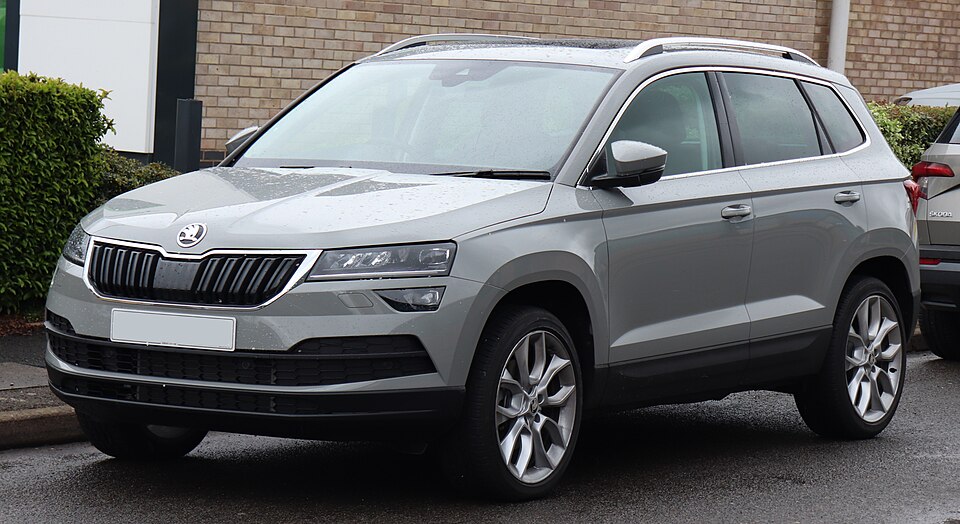
Škoda Karoq 4×4 vibration or driveline noise: what it usually is
A vibration or droning noise from a Škoda Karoq 4×4 that changes with road speed is usually a driveline issue: a worn wheel bearing, a tyre problem, a worn driveshaft joint, or a fault in the all-wheel-drive system. The Karoq 4×4 sends power to the rear axle through a coupling when the front wheels need help, so faults can come from more places than a front-wheel-drive car. We diagnose driveline noises at our Škoda specialist workshop in Bristol.
How the Karoq 4×4 system works
The Karoq 4×4 is a front-wheel-drive car most of the time, with an electronically controlled coupling that sends drive to the rear wheels when it is needed, for example when traction is poor or when accelerating hard. Škoda describes this as an electronically controlled all-wheel-drive system. A propshaft carries the drive to the rear, where the coupling and rear differential share it between the rear wheels. That is more parts that can wear, and that is why the exact source of a noise needs careful tracing. Škoda’s own information describes how the system operates; it is not evidence of a common fault.
Is it linked to road speed, engine speed or turning?
That single question narrows the search more than anything else.
| What you notice | Most likely area |
|---|---|
| Hum or drone that rises with road speed and changes when you steer left or right | Wheel bearing |
| Vibration at a particular speed, felt in the steering wheel | Wheel balance, tyre damage or a bent wheel |
| Vibration felt through the floor or seat that rises with speed | Propshaft, rear coupling or rear wheel |
| Clicking when turning on full lock | CV joint |
| Clunk when moving off or changing from drive to reverse | Mounts, driveshafts or rear driveline play |
| Vibration that changes with engine revs, not road speed | Engine or exhaust, not the driveline |
Tyres come first
On any four-wheel-drive car, tyres need to be well matched. Different brands, different tread depths or uneven wear between the front and rear tyres can strain the driveline and cause vibration or binding, especially on tight turns. Before we blame a coupling or a propshaft, we check the tyres, their pressures, their wear pattern and their balance. It is the cheapest thing to rule out and often the answer.
What we see on the Karoq
- Wheel bearings. A common source of a speed-related hum, especially after pothole damage.
- Driveshaft joints and boots. A split boot lets in dirt and water, and the joint wears.
- The rear coupling. The Karoq 4×4 coupling is a wearing part that can fail or lose performance, and its oil and filter need servicing on some versions. Check the maintenance schedule for your car.
- The propshaft and its bearings. A worn centre bearing or joint can cause vibration at speed.
- The rear differential. Low or old oil, or wear, can cause whine or noise.
The same family of all-wheel-drive faults is discussed in our Tiguan 4Motion guide, and the two cars have a lot in common.
How we diagnose it at our Bristol workshop
We road test the car to feel and hear the problem, check the tyres, then lift the car and inspect the wheel bearings, driveshafts, propshaft, coupling and rear differential. We scan the car with our VAG diagnostics for all-wheel-drive faults. We tell you what is worn, what is urgent and what can wait.
What the repair involves
A bearing, driveshaft or joint is replaced as needed, and a coupling that needs servicing has its fluid and filter changed. If the coupling or the propshaft has failed, we explain the options before we start. Tyres that are mismatched are best sorted at the same time. We road test afterwards to confirm the vibration has gone. You can see our other repairs on the mechanical repairs page.
Karoq driveline work in Bristol and the surrounding area
We look after Škoda owners across Bristol and the surrounding area. To book a diagnosis, send the registration, engine, mileage and when the vibration happens through our contact page.
Frequently asked questions
Is it safe to drive with a driveline vibration?
A mild vibration can usually be driven to a workshop, but a loud hum, a clunk or a vibration that is getting worse should be checked quickly. A failing wheel bearing in particular should not be left.
Do the tyres really matter that much?
Yes. On a four-wheel-drive car, mismatched or unevenly worn tyres can strain the driveline.
Does the 4×4 coupling need servicing?
On some versions, yes. Check the maintenance schedule for your car, or ask us.
Sources and image credit
- Škoda technical background: electronically controlled all-wheel drive — system operation, not evidence of a recurring vibration defect.
- Škoda owner information — vehicle-specific documentation and maintenance guidance.
Image: Vauxford, Wikimedia Commons, CC BY-SA 4.0. Reduced display size; no crop or other alteration.
