
What do coding, basic settings and adaptation mean?
These terms describe different types of work carried out through a vehicle’s control systems. They are sometimes used as if they mean “reset the gearbox”, but coding, basic settings and adaptation are not interchangeable. Whether any of them is needed depends on the exact DSG or S tronic unit and the repair being performed.
At Trescothick Automotive in Bristol, diagnostic equipment is used alongside practical checks to establish what the vehicle requires. The aim is to follow the correct information for the fitted gearbox, not to try a generic reset.
Calibration is not a cure-all
A calibration procedure can establish specified operating references, but it cannot repair damaged wiring, worn clutch components or a mechanical defect. The cause of the complaint should be established first; any coding, basic settings or adaptation then follows the procedure for that gearbox and the work performed.
Coding: configuration for the vehicle
Coding configures a control unit for the vehicle’s equipment and system arrangement. Depending on the unit, this can include how it is expected to communicate or which functions are present. A replacement mechatronic or transmission controller may need suitable coding as part of commissioning.
Coding is not a repair for a worn clutch, blocked hydraulic passage, faulty sensor or damaged wiring. Incorrect configuration can also create new faults or prevent systems from working as intended. The values and procedure must match the vehicle and installed parts.
Basic settings: a guided calibration procedure
Basic settings are defined diagnostic routines that establish or check specified operating references. Depending on gearbox design and the work performed, a routine may be required after a repair or component replacement. The control unit may need to be in particular conditions for a procedure to run correctly, and not every transmission offers the same routines.
A successful routine confirms only that the specified procedure completed under its conditions. It does not prove that every gearbox part is healthy or that an unrelated symptom has been fixed.
Adaptation: values learned or applied by the control system
Adaptation can refer to values the transmission control system learns or to a defined service procedure that calibrates a component. The precise meaning depends on the gearbox and diagnostic software. Some adaptation occurs as part of normal operation; other functions are workshop procedures after particular repairs.
That is why “it needs an adaptation” is incomplete advice. Which value or routine is meant? What evidence suggests it is needed? What repair or condition should it address? Those questions help distinguish a justified procedure from an attempt to clear symptoms without diagnosis.
Why one reset procedure cannot fit every DSG
Volkswagen, Audi, SEAT, Škoda and CUPRA use a number of DSG and S tronic families. Their mechatronic units, clutch systems, software versions and diagnostic functions differ. Even procedures for two gearboxes with similar branding can use different prerequisites and results.
A guide found online for another gearbox code or software version may be irrelevant or unsuitable. The correct technical information is vehicle-specific. Our identification guide explains why the exact transmission matters before service information is applied.
When might these operations be relevant?
Coding, basic settings or adaptation may form part of a documented repair where a control unit, mechatronic assembly, clutch or related component has been replaced or adjusted. The required steps depend on the vehicle and the component involved. A technician should confirm which operation is called for and check the result as part of the repair.
They should not be treated as routine cures for judder, harsh changes, warning lights or delayed engagement. Those complaints can come from mechatronic, clutch, electrical, sensor, hydraulic or mechanical faults. A diagnostic code or symptom alone is not proof that a reset is required.
What a complete repair should establish
A sensible process identifies the gearbox, records the complaint and diagnostic evidence, and checks the relevant systems before work is chosen. If coding or calibration is needed, the repair explanation should say which procedure applies and why. The outcome should then be verified against the original complaint, following the applicable workshop information.
Our article what happens during a mechatronic diagnosis describes how evidence and practical checks guide the recommendation. For help with a DSG or S tronic concern, see our diagnostic service.
Useful Links
- Volkswagen erWin — manufacturer repair and training information
- Volkswagen UK — technical information and repairer requirements
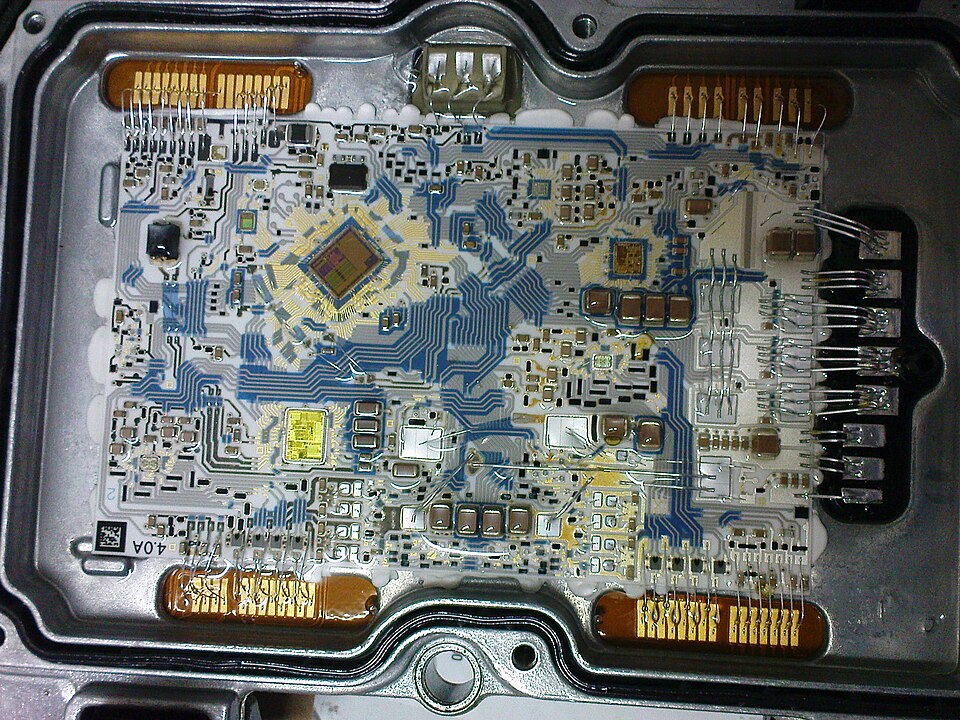
Image source: Fatih ÇÖL, DQ200 DSG control unit with its cover removed, Public domain. Unmodified photograph; this is an illustration and does not establish a fault.
