
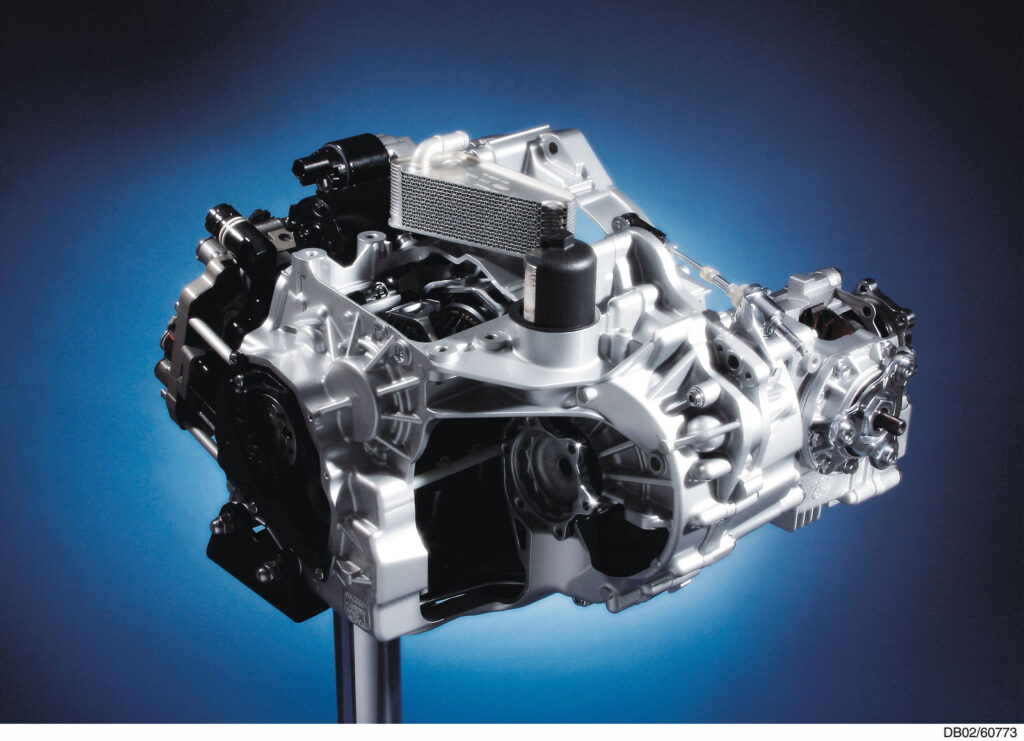
Do You Have DQ250 DSG Mechatronic Problems?
The DQ250 is a 6-speed wet-clutch DSG transmission used across a wide range of Volkswagen, Audi, SEAT and Škoda vehicles. When problems develop, symptoms can include harsh or erratic gear changes, flashing gear indicators, loss of Reverse, loss of drive or the gearbox entering emergency mode.
Mechatronic faults are one possible cause, but similar symptoms can also result from clutch, hydraulic, sensor, electrical or mechanical gearbox problems.
We combine specialist diagnostic equipment with practical mechatronic knowledge to identify the actual cause before recommending a repair.
Correct diagnosis matters because replacing an expensive mechatronic unit or complete gearbox without first confirming the underlying cause can create unnecessary costs.
DQ250 Faults Need Accurate Diagnosis
What Is the DQ250 DSG?
The DQ250 is a 6-speed wet-clutch dual-clutch transmission commonly identified by the transmission designation 02E.
It was one of the first DSG transmissions fitted widely across VAG vehicles and has been used in numerous Volkswagen, Audi, SEAT and Škoda applications.
Unlike the dry-clutch DQ200, the DQ250 uses clutches operating in oil.
The transmission combines:
- Two clutches
- Mechanical gearsets
- Hydraulic control
- Electronic sensors
- Solenoid valves
- A mechatronic control system
These systems work together to control gear selection and clutch operation.
Because the gearbox relies on mechanical, hydraulic and electronic systems working together, similar symptoms can have very different causes.
Which Vehicles Use the DQ250 DSG?
The DQ250 has been fitted to a large number of VAG vehicles.
Exact fitment depends on model year, engine, drivetrain and specification, so the model name alone does not confirm which gearbox is installed.
Volkswagen
DQ250 applications can include versions of:
- Volkswagen Golf
- Volkswagen Passat
- Volkswagen Touran
- Volkswagen Caddy
- Volkswagen Jetta
- Volkswagen Scirocco
- Volkswagen Sharan
Audi
Applications can include versions of:
- Audi A3
- Audi S3
- Audi TT
- Audi Q2
SEAT
Applications can include versions of:
- SEAT Leon
- SEAT Altea
- SEAT Toledo
- SEAT Alhambra
Škoda
Applications can include versions of:
- Škoda Octavia
- Škoda Superb
- Škoda Yeti
Not every engine or version of these models uses a DQ250.
Correctly identifying the gearbox fitted is therefore an important first step before diagnosing or servicing it.
Common Symptoms of DQ250 Mechatronic Problems
Possible symptoms include:
- Harsh or erratic gear changes
- Gearbox dropping out of gear
- Failure to re-engage a gear
- Loss of Reverse
- Loss of forward gears
- Delayed engagement
- Gearbox remaining in one gear
- Flashing PRNDS gear indicator
- Transmission warning light
- Engine warning light
- Gearbox malfunction message
- Emergency or restricted operating mode
- Problems becoming worse once the transmission is warm
- Normal operation temporarily returning after restarting the vehicle
These symptoms do not automatically prove that the mechatronic unit itself has failed.
Clutch wear, electrical faults, hydraulic problems and mechanical gearbox faults can sometimes cause similar behaviour.
Valve & Solenoid Problems
The DQ250 mechatronic unit uses electrically controlled solenoid valves to regulate hydraulic pressure and control gear selection.
Faults involving these circuits can produce poor gear selection, harsh changes, loss of gears or emergency operation.
Codes that may appear during diagnosis include P174A and P174E, which can relate to electrical faults involving valves controlling the two transmission sections.
Other possible solenoid-related diagnostic information includes P0751, P0756, P0761 and P0766.
The presence of these codes gives useful direction to the investigation, but it is still necessary to confirm why the fault has been stored.
Hydraulic Pressure Control Problems
Hydraulic pressure is fundamental to DQ250 operation.
The mechatronic unit must control pressure accurately to operate the clutches and gear-selection mechanisms.
Diagnostic codes such as P0746 or P0776 may appear where the transmission detects a problem involving pressure-control solenoids.
Symptoms can include harsh gear changes, loss of gears or the transmission entering emergency mode.
A pressure-related code still requires investigation because electrical, hydraulic and mechanical issues can sometimes produce related symptoms.
Input & Output Speed Sensor Problems
The transmission controller needs accurate information about gearbox speeds to determine whether gears and clutches are operating as expected.
Diagnostic information may include codes such as:
P0716 — transmission input-speed sensor signal problem
or
P0722 — transmission output-speed sensor signal problem.
Incorrect or missing speed information can affect gear selection and cause the transmission controller to restrict gearbox operation.
Again, the diagnostic code identifies an area requiring investigation rather than automatically proving which component should be replaced.
Unexpected Gear Disengagement
Another recognised DQ250 diagnostic code is P2711, relating to unexpected mechanical gear disengagement.
A vehicle with this type of problem may:
- Drop out of gear
- Fail to engage correctly
- Display transmission warnings
- Enter emergency mode
- Show poor or inconsistent gear selection
P2711 can be particularly useful diagnostic information, but the actual gearbox behaviour and other stored information still need to be considered before reaching a conclusion.
Why Can the PRNDS Display Start Flashing?
A flashing PRNDS gear display is a recognised sign that the DSG control system has detected a transmission fault.
It may occur alongside:
- Loss of gears
- Poor gear selection
- Emergency mode
- Harsh shifting
- Transmission warnings
The flashing display tells you that the transmission control system has detected a problem.
It does not, by itself, tell you which component has failed.
Why Does a DQ250 Sometimes Fail When Hot?
Some DQ250 problems can become more noticeable once the transmission has warmed up.
Electrical components, sensors, hydraulic systems and mechanical clearances can all behave differently as temperature changes.
A gearbox might therefore work normally when first driven and then develop:
- Poor gear selection
- Harsh changes
- Loss of Reverse
- Loss of drive
- Emergency mode
after the vehicle has been driven for a period of time.
Temperature-related behaviour is useful diagnostic information and should always be mentioned when the vehicle is booked in.
Why a Fault Code Is Only the Starting Point
Modern DSG transmissions can store detailed fault information, but reading the code is only the beginning of diagnosis.
A DQ250 problem can potentially involve:
- Mechatronic electronics
- Solenoid valves
- Hydraulic pressure
- Speed sensors
- Wiring and connectors
- Clutch components
- Gear-selection mechanisms
- Transmission oil condition
- Software or adaptation
- Mechanical gearbox components
Replacing whichever component appears in the fault description without confirming the underlying problem can lead to unnecessary expense.
Neil combines diagnostic information with vehicle behaviour, live data and practical testing to determine what is actually happening.
Does a DQ250 Fault Mean the Whole Gearbox Needs Replacing?
No.
Loss of Reverse, flashing PRNDS, harsh changes or emergency mode does not automatically mean that the complete transmission requires replacement.
The problem may involve:
- The mechatronic system
- An electrical circuit
- A sensor
- Hydraulic control
- Clutch operation
- A mechanical gearbox component
The repair required depends entirely on what diagnosis reveals.
Can DQ250 Problems Be Intermittent?
Yes.
Some problems may initially occur only occasionally.
A vehicle might display a transmission warning, lose gears or behave incorrectly before returning to normal after being switched off and restarted.
That does not necessarily mean the fault has disappeared.
Stored diagnostic information and the circumstances surrounding the failure can be particularly useful when investigating an intermittent problem.
DQ250 DSG Oil & Maintenance
The DQ250 is a wet-clutch transmission, meaning its clutches and internal systems rely on the correct transmission fluid.
Correct oil specification and appropriate servicing are therefore important.
Service requirements can vary according to the vehicle and application, so we identify the exact gearbox and vehicle specification rather than assuming every DSG has the same maintenance requirements.
If you are unsure which DSG is fitted to your vehicle or what maintenance is required, provide the registration when contacting us.
How We Diagnose DQ250 DSG Problems
Understanding the Symptoms
We start by establishing exactly what the gearbox is doing.
Useful information includes whether:
- The problem occurs when cold or hot
- Reverse has disappeared
- Particular gears have been lost
- PRNDS flashes
- The gearbox drops into Neutral
- Restarting temporarily restores operation
- The vehicle has recently had gearbox work
Reading Diagnostic Information
We interrogate the relevant transmission and vehicle control systems and review stored fault information.
Codes involving solenoids, hydraulic pressure, speed sensors or gear selection can help direct the investigation.
Reviewing Live Data
Where appropriate, live transmission information can help us understand how sensors, clutches and control systems are behaving while the fault occurs.
Investigating the Cause
The diagnostic information is considered alongside the symptoms and further testing.
The objective is to distinguish a genuine mechatronic problem from clutch, wiring, hydraulic or mechanical gearbox faults.
Explaining What We Find
Once the underlying cause has been established, we explain what has been found and discuss the appropriate repair before work proceeds.
Our aim is to repair the actual fault rather than replace expensive components based solely on a stored diagnostic code.
DQ250 Diagnosis From a VAG Mechatronics Specialist
That experience matters with transmissions such as the DQ250 because electronic, hydraulic and mechanical systems are closely connected.
A transmission symptom that appears to indicate one failed component can sometimes have a completely different underlying cause.
For wider gearbox problems, read about our DSG & S tronic mechatronic diagnostics.
For warning lights, electrical problems and other difficult faults, see our VAG diagnostics service.
DQ250 Compared With Other DSG Gearboxes
Identifying the DSG fitted to the vehicle matters because the DQ250 is not the same transmission as the DQ200, DQ381 or DQ500.
The DQ200 is a 7-speed dry-clutch DSG used in many lower-torque applications.
The DQ250 is a 6-speed wet-clutch DSG.
The later DQ381 is another 7-speed wet-clutch DSG used in many newer applications.
Each transmission has its own design, servicing requirements and recognised fault patterns.
You can also read our guides to DQ200 DSG mechatronic problems and DQ381 DSG mechatronic problems.
Specialist Expertise at Competitive Independent Prices
DSG faults can become expensive when major components are replaced before the underlying problem has been properly established.
As an independent VAG specialist, we combine specialist diagnostics, practical gearbox knowledge and competitive independent-garage pricing.
The aim is straightforward:
Diagnose the problem correctly → identify what actually needs repairing → avoid unnecessary parts replacement.
DQ250 DSG FAQs
Is the DQ250 the Same as the 02E DSG?
Yes. DQ250 is commonly used to describe the 6-speed wet-clutch DSG also identified by the transmission designation 02E.
Is the DQ250 a Wet-Clutch DSG?
Yes.
The DQ250 uses a wet dual-clutch arrangement.
How Many Gears Does the DQ250 Have?
The DQ250 is a 6-speed dual-clutch transmission.
Which Vehicles Use the DQ250?
Versions of the Volkswagen Golf, Passat, Touran, Caddy, Jetta, Scirocco and Sharan have used the DQ250.
It has also been fitted to versions of the Audi A3 and TT, SEAT Leon and Altea, and Škoda Octavia and Superb, among others.
Exact fitment depends on model year, engine, drivetrain and specification.
Can a DQ250 Fault Cause Loss of Reverse?
Yes.
Loss of Reverse is one possible symptom of a DQ250 transmission or mechatronic problem.
It does not automatically mean that the complete gearbox has failed.
What Does Flashing PRNDS Mean?
Flashing PRNDS means the transmission-control system has detected a fault.
Diagnostic testing is needed to determine why.
Can a DQ250 Fault Get Worse When Hot?
Yes.
Some electrical, hydraulic or mechatronic problems can become more noticeable as transmission temperature rises.
Does Restarting the Vehicle Fix the Problem?
No.
Restarting may temporarily restore normal operation in some intermittent faults, but it does not remove the underlying cause.
Does a DQ250 Fault Mean I Need a New Gearbox?
No.
Proper diagnosis is required to determine whether the fault involves the mechatronic system, clutches, sensors, hydraulics, wiring or mechanical components.
Can You Diagnose a DQ250 Mechatronic Fault?
Yes.
We diagnose DSG and mechatronic problems using specialist equipment alongside practical VAG fault-finding experience.
If your Volkswagen, Audi, SEAT or Škoda has a DQ250 gearbox warning, flashing PRNDS display, harsh gear changes, loss of Reverse or another suspected DSG fault, specialist diagnosis can help establish what is actually causing the problem.
You can read more about our DSG & S tronic mechatronic diagnostics, VAG diagnostics and VAG mechanical repairs services.
Tell us the vehicle registration, what the gearbox is doing and any diagnostic information you have already been given, then use our contact page to arrange a diagnostic assessment.